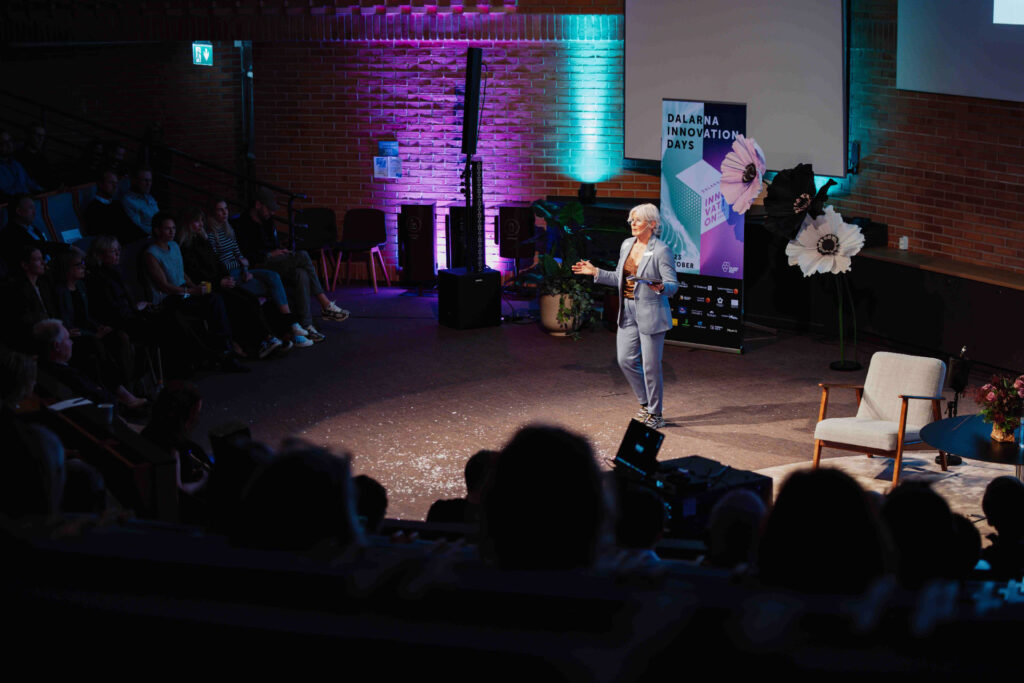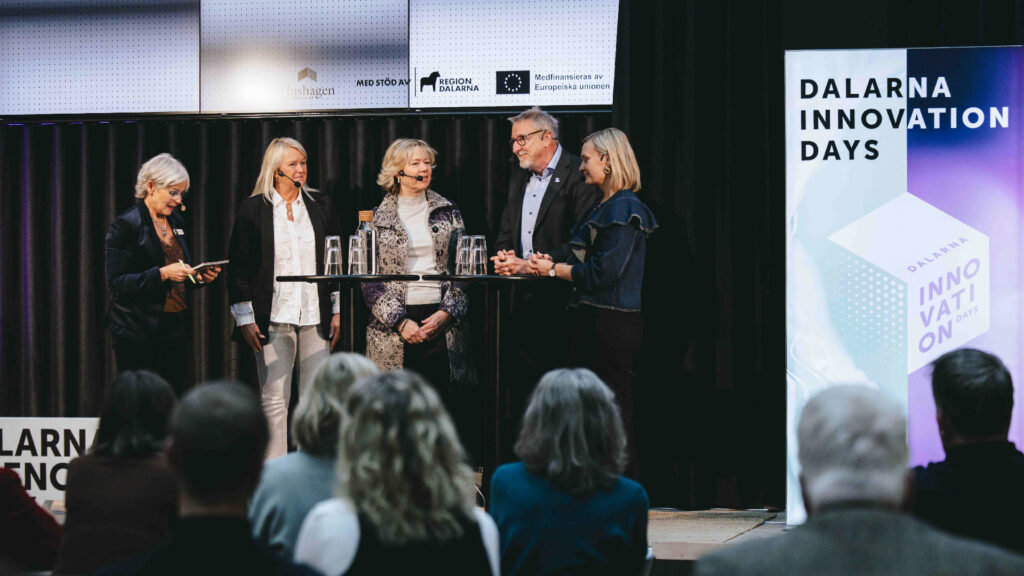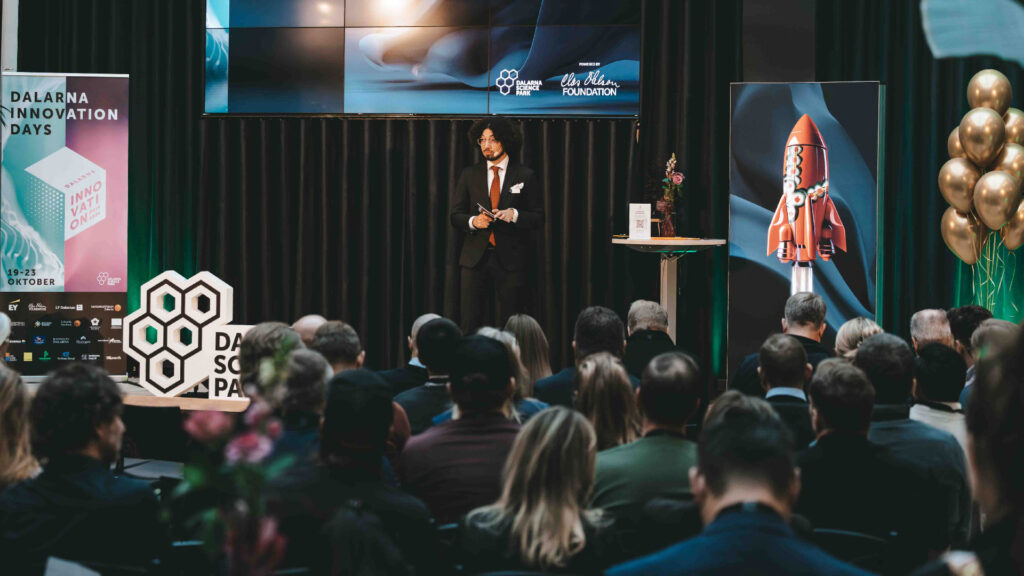
What happens to the food supply when society faces a crisis, and how can businesses, government agencies, and residents of Dalarna prepare? This was the focus when about 100 participants gathered for the “Food Preparedness in Dalarna” event during the Dalarna Innovation Days.
One of today's keynote speakers was Niklas Kämpargård, an author and lecturer with extensive experience in crisis preparedness. Among other works, he has written the books *Preppa mat*, *Krishandboken*, and *Beredd*.
During the lecture, he discussed how we can prepare for disruptions in, for example, the electricity supply, payment systems, and access to food. Niklas emphasized that preparedness is not so much about preparing to fend for ourselves in isolation. It is more important that we know what resources are available in our local area and how we can help one another when society is affected by disruptions of various kinds.
“You need to talk to and get to know your neighbors, people who work in the same industry, or who are active in the same area, so that together you can build a strong preparedness,” says Niklas Kämpargård.
Leksands Knäckebröd works on emergency preparedness every day
For Leksands Knäckebröd, preparedness is part of its daily operations. Among other things, the company focuses on sourcing local raw materials, securing its own water supply, and reducing the vulnerability of its digital systems.
“We have to think and act in our day-to-day lives to be prepared for a crisis. Our business model is to buy Swedish grain and try to source our rye as locally as possible,” says Peter Joon, CEO of Leksands Knäckebröd.
The company relies on a stable supply of raw materials. During the lecture, Peter Joon explained how the heavy rains in 2023 affected the supply of local rye. This illustrates how weather events can have major consequences for agriculture and, consequently, for food processing as well.
Food security is about more than just producing more food
Daniel Bergquist of the Swedish Food Agency emphasized that companies need to be better prepared for disruptions and find alternative ways to secure access to key raw materials and other supplies needed to produce food.
“If we are to strengthen Sweden’s food supply, it’s not just a matter of increasing Swedish food production. We need to consider how we increase production; if we do so by increasing our dependence on imported inputs, it may not be worth much in a crisis,” says Daniel Bergquist.
He particularly emphasized the importance of collaboration between large and small food companies. Large producers account for a significant portion of the food supply, while smaller companies contribute through local production, geographic diversity, and innovative solutions.
Anders Carlborg, project manager at the Dalarna County Administrative Board, was one of the speakers. He emphasized that disaster preparedness efforts can also create better conditions for the region’s food producers.
“I would argue that food security is a catalyst for local food production,” says Anders Carlborg.
The County Administrative Board, in collaboration with the food industry, has developed the “Food from Dalarna” label, which makes it easier for consumers to find local food in stores. Anders Carlborg believes that the growing interest in preparedness could have a similar effect. More people may become aware of local food production and its importance for employment and a vibrant rural community.
Emergency food doesn't have to be canned food
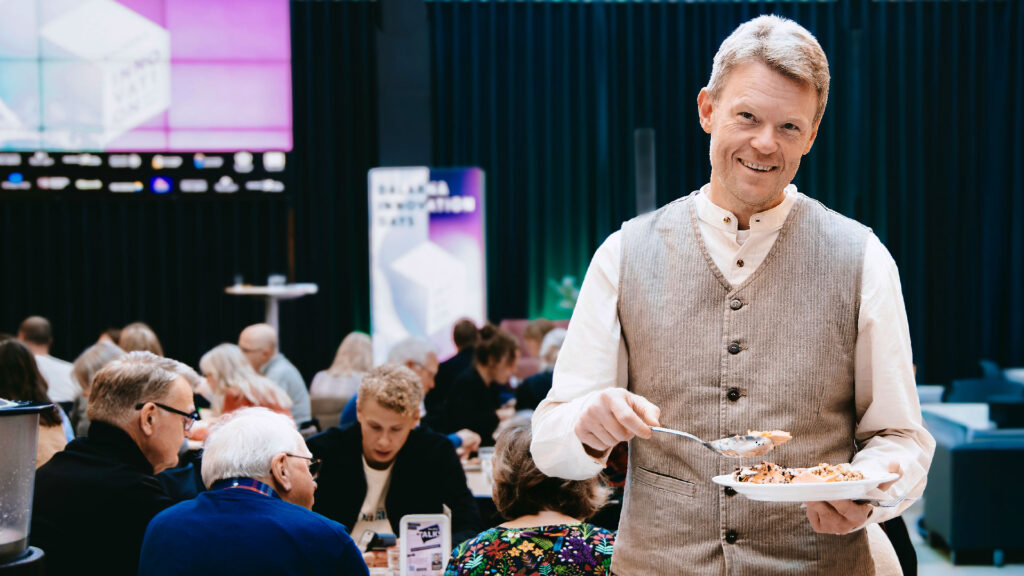
Lunch also served as a concrete example of the day’s theme. Many participants had expected a simple emergency meal consisting of canned goods and pantry staples. Instead, Äteriet, the restaurant at Dalarna Science Park, served a well-balanced meal featuring fresh rainbow trout from Lake Siljan, Swedish bread wheat, gourmet carrots from Wålstedts Lantbruk in Dala Floda, and protein-rich bread from Leksands Knäckebröd.
“I suppose it’s a pretty good option for emergency food, isn’t it? Today is also Seafood Day, and of course we want to highlight that, since we need to expand aquaculture in Dalarna and Sweden,” says David Levrén, project manager at Dalarna Science Park.
The menu was inspired by Niklas Kämpargård's thoughts on the importance of food for security in the event of a societal disruption.
“When we’re faced with disruption, we want to keep eating foods we’re familiar with—it gives us a sense of security. These are ingredients that we have excellent conditions for producing right here in Dalarna,” says Niklas Kämpargård.
New Opportunities for Collaboration and Funding
The event also gave participants the opportunity to network and gain a clearer picture of how a municipality can address food security. Anna Hane Karlsson, food services manager for the municipality of Smedjebacken, provided examples of how they have developed solutions for food storage, backup power, and field kitchens with relatively limited resources.
One of the visitors was Jonny Gahnshag, from the Business Development Unit at Region Dalarna & Business Region Dalarna
“I’m already somewhat familiar with these issues, but the Swedish Food Agency’s presentation gave me a better understanding of the various roles played by government agencies in food security,” he says.
Isak Spjut from the Swedish Agency for Economic and Regional Growth was also among the audience.
“It’s always both interesting and inspiring to gain insight into the work being done in Dalarna, the initiatives being carried out, and the needs of the region,” he says.
Today’s lectures and discussions showed how food security affects the entire supply chain, from farmers and food processing companies to wholesalers, grocery retailers, restaurants, and consumers. By strengthening local production, reducing vulnerability, and fostering collaboration, Dalarna can be better prepared for future disruptions.