At Stora Skedvi Dairy, whey has long been a natural byproduct of cheese production. But when the dairy began to look at this waste stream with fresh eyes, an idea emerged that has since become an integral part of the company’s development. Through curiosity, extensive testing, and a willingness to challenge established practices, a byproduct has become the foundation for something new—an effort that was recently recognized in an innovation competition.
"You say you make cheese, but you don't. You make whey, after all."
That comment really got Pernilla Hessman at Stora Skedvi Dairy thinking. She had long been wondering how the dairy could make better use of the whey, but it wasn’t until someone turned the perspective around that the pieces of the puzzle began to fall into place.
– It was a lightbulb moment. How do we actually think? We should be thinking the exact opposite.
In the past, most of the whey was sent back to the farm as plant fertilizer—a common practice in the industry, since whey processing often involves significant investments and energy-intensive processes. To Pernilla, it felt as though a valuable raw material wasn’t being put to good use.
– It’s about both economics and sustainability. I want to use everything. In the past, the whey was sent back to the farmer, but I want to keep it here at the dairy and do something with it.
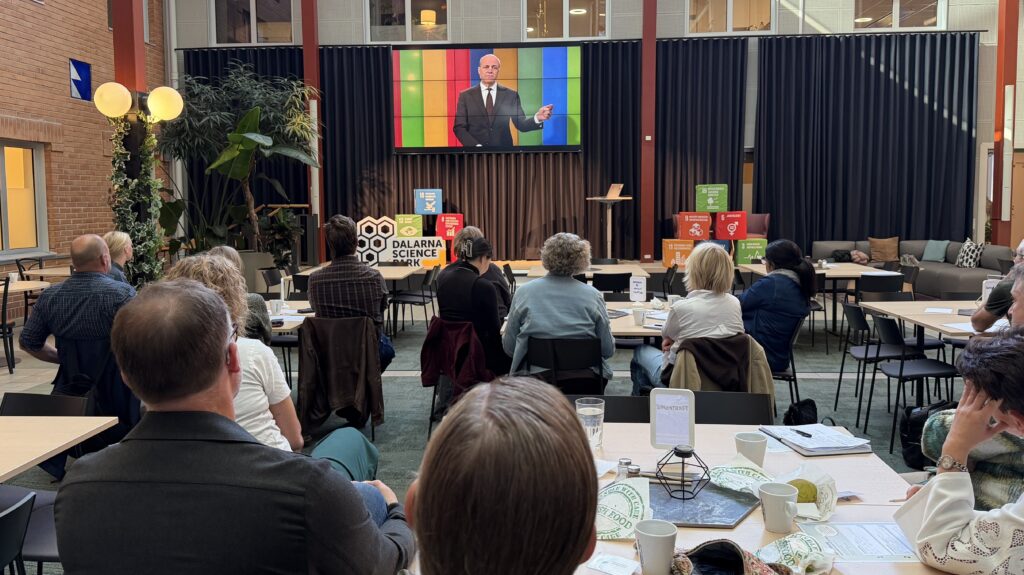
At the same time, she knew that an idea alone wasn’t enough. Developing a new food product requires both time and expertise—something that can be difficult to find room for in a small artisanal dairy where daily production must always run smoothly. So when the opportunity arose to participate in Dalarna Science Park’s Food Innovation program, she gained access to a network of business developers, researchers, and industry experts who could offer new perspectives and help test her ideas.
That marked the start of a development process in which both the product and the business took shape. Together with experts from RISE and other organizations, they discussed everything from recipes and texture to shelf life, the market, and how whey could become a long-term, sustainable part of the dairy’s operations. For Pernilla, this support was above all a way to gain new perspectives and the courage to keep trying.
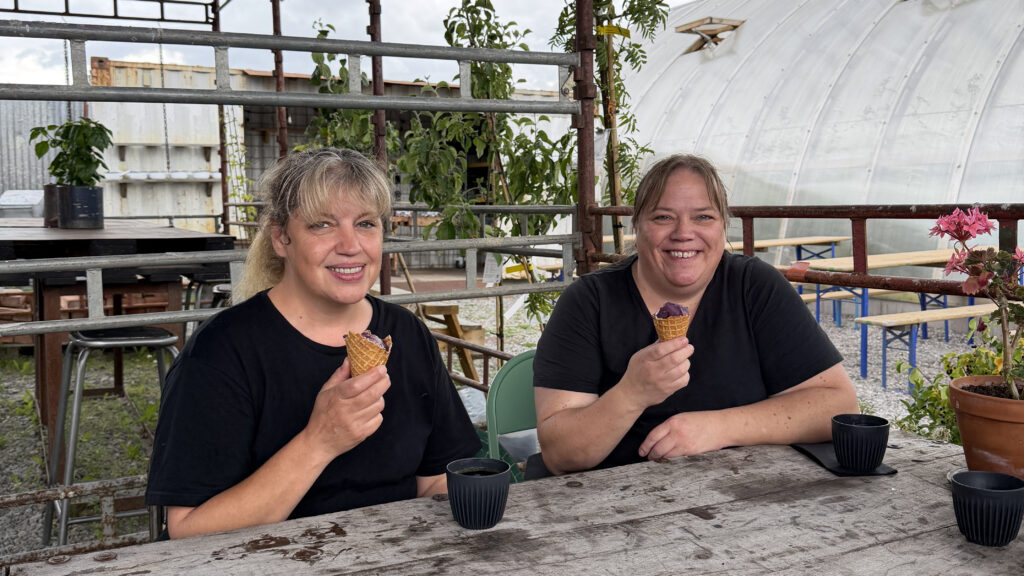
In the end, the project turned into ice cream. But the path to that point was far from straightforward. Recipes were tested, revised, and tested again. The ice cream turned out too icy, too sweet, or had the wrong texture. Sometimes it felt like every step forward was followed by a new problem.
– For a while, I felt like I couldn't stand the thought of eating even one more ice cream.
Despite the setbacks, the development work continued. Small adjustments made a big difference, and each test yielded new insights. When the first flavor was finally perfected, the sense of accomplishment was all the greater.
– The first flavor that really stood out was rhubarb and vanilla. It brought tears to our eyes.
For Pernilla, this journey shows that innovation is rarely about a sudden breakthrough. It often begins with new perspectives on what already exists. In the case of Stora Skedvi Mejer, it was about challenging the notion that whey requires large volumes, expensive technology, and industrial processes to be utilized. When the dairy’s creativity and craftsmanship were combined with the right expert support, it marked the beginning of new flavors, innovative products, and more opportunities.