We recently conducted the first Dalarna Innovation Panel of the year. The panel was asked the question: In which sector do you think companies in Dalarna can demonstrate strong innovative power in the future? Most answered industry, closely followed by the hospitality industry and the electricity and energy industry.
It is perhaps not surprising that industry is emerging as a winner and that electricity and energy are among the top three, given Northvolt's intended establishment and the expansion already underway at Hitachi Energy.
In the Innovation Panel, Dalarna residents state that the need for innovation reflects the times we live in, they also believe that for an innovation to be successful, it needs to respond to an actual need in the market.
The result with industry and the electricity and energy sector among the top three is very logical. Because there is no avoiding the fact that there has been another alarm report from the IPCC (the EU's climate panel) saying that we will not reach the 1.5 degree target by 2030 and that we must sharpen our efforts even more.
Because it is industry that must and can solve many of the climate challenges we face. Industry holds many of the keys and must be innovative today to be competitive tomorrow. We are now seeing several examples of industry taking the lead in creating new solutions to reduce carbon emissions and environmental impacts.
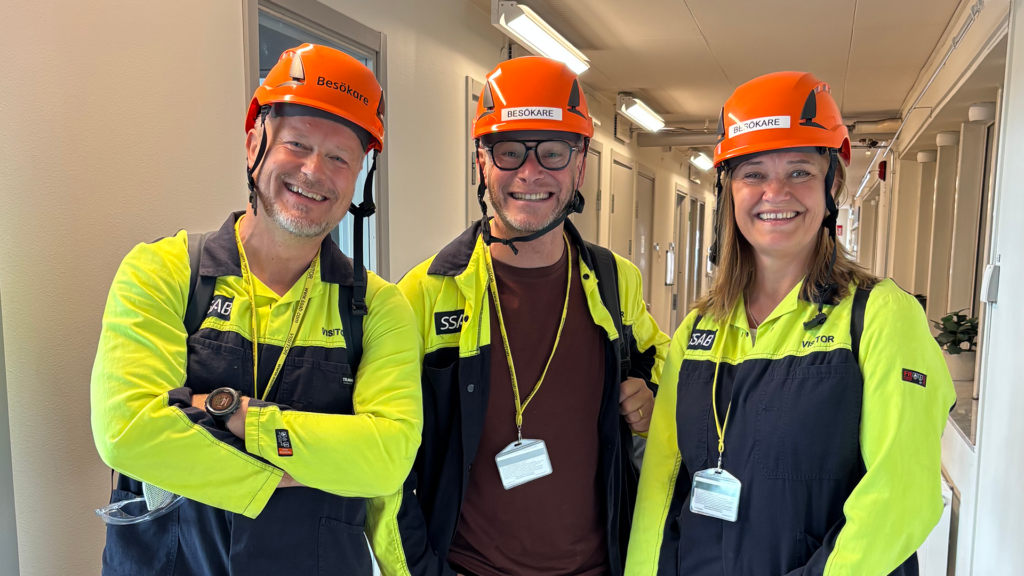
At the same time, many have expressed "it'll never work" regarding SSAB's hybrid initiative and also Nothvolt's large-scale establishment of gigafactories. But it seems to be working, and it also looks like it is moving faster than first thought. Now more parts have to keep up. At Dalarna Talks on the last day of March, the panel concluded with the insight that we must also innovate within the bureaucracy. We know that the exercise of authority sometimes puts obstacles in the way of new initiatives, things that may not have been tried before and for which there are therefore no ready-made regulations, and that processing times are often far too long. We also know that politicians in a global arena must create incentives so that companies are actually motivated to act on the challenges we face.
Northvolt and Hitachi also describe how the whole ecosystem must work. In order to continue to innovate and lead development, technical collaboration, research with the help of universities and colleges, start-ups that can deliver new solutions, and access to specialists and experts will be crucial. Large companies need functioning supply chains that must sharpen their skills in order to deliver, and Dalarna Science Park is one of many around the companies that can provide support.
Tobias Degsell, our future scout during Dalarna Talks, sums it up so well, we must work together and that we must go from thinking - to doing.
Those who will succeed, and we have examples here in the text, are working together across organizational boundaries, they are brave and they are determined to achieve their ambitious goals. This is exactly how we need to work, together and with new approaches, not in the same old rut.
The future for industry in Dalarna is bright, because the industry we will now be associated with is the future. We need battery-powered vehicles, new, more efficient ways of storing energy and we can see in the foreseeable future that we can produce steel without coal.
So put away the doomsday clocks and think instead: if the problem can't be solved, is it wrongly formulated? Our shining examples show that innovation can renew every part of a business. This is how we take new steps into the future.