A modern wool station is now being established in Sörforsa outside Hudiksvall, bringing together the entire value chain for Swedish wool. The facility will be the hub of a new circular system – from sheep to finished product. The initiative reduces dependence on imported and fossil-based fibers, strengthens security of supply, and gives the industry access to bio-based, traceable materials.
Wool as a strategic industrial raw material
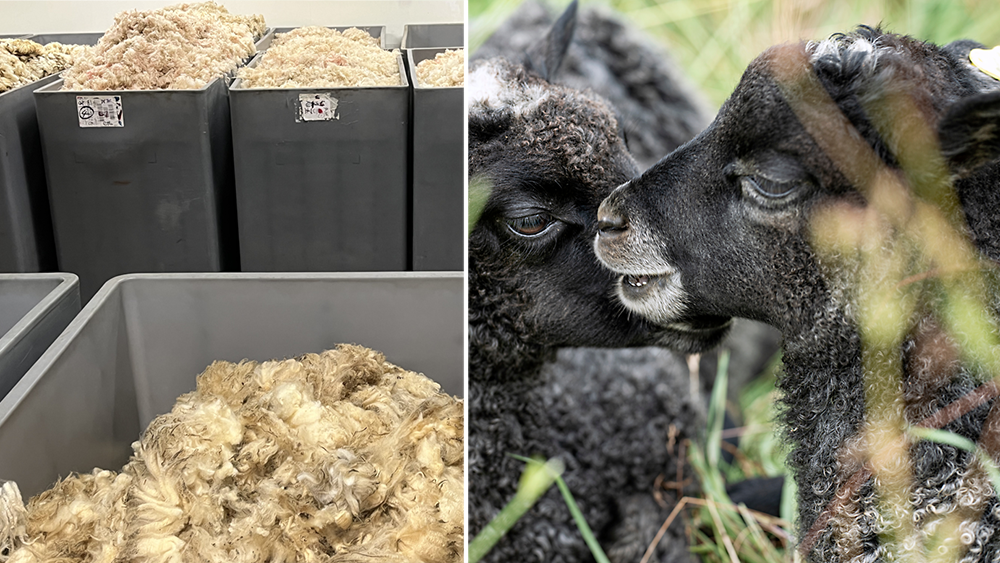
Sweden produces around 1,000 tons of wool annually, while more than half is discarded and the country imports large quantities of often fossil-based textile fibers. In a situation where the industry is facing increased demands for reduced climate impact, robust supply chains, and traceable materials, the system demonstration tower and the Woolution project —scalable solutions for a circular and resilient textile system—are now being launched .
This marks the next step from unused waste product to resource in a circular, resilient, and competitive Swedish wool industry. The initiative is led by Dalarna Science Park together with Swedish Textile, Holma-Helsinglands, Axfoundation, and several leading industrial companies.
We now know that Swedish wool works technically, commercially, and in terms of sustainability. The system demonstrator is about building an industrial system that reduces dependence on imported materials and builds preparedness and resilience within the country's borders, says Lina Sofia Lundin of Dalarna Science Park.
The project builds on the results of the Swedish Wool Initiative, where over 30 products demonstrated how Swedish wool can compete in everything from fashion and interior design to technical and industrial applications. Efforts have also been made to quality-assure the raw material through the Swedish Wool Standard and to strengthen the efficiency of logistics and collection. The focus is now shifting from product demonstration to industrial infrastructure, system solutions, and upscaling.
From pilot to industrial system demonstrator
The facility is being established outside Hudiksvall, where the textile industry has been based in Holma-Helsingland for over 100 years. The demonstrator brings together the entire value chain, from resource-efficient collection and quality-assured classification to the finished product, in an integrated node with full digital traceability adapted to product passport requirements. A modern wool spinning mill is also being built here by the company Swedish Textile.
The initial capacity of the demonstrator is 100 tons of washed wool per year, with a clear plan to scale up to 500 tons – equivalent to half of Sweden's wool production. In the longer term, the ambition also includes the Nordic and Baltic countries. Establishment will begin as early as 2026 and, from 2029, will be managed on a long-term basis in commercial operation.
By collecting wool from many farms and classifying it according to Swedish wool standards, wool of the right quality is made available to industry in larger volumes. This enables long-term, traceable, and reliable products and business based on Swedish wool, says Rebecca Josefsson Ulvling, CEO of Swedish Textile.
An offer to industry
The initiative is aimed at industrial companies seeking:
- bio-based and circular materials that can replace fossil-based fibers
- Traceable raw materials in line with EU requirements for product passports and eco-design
- stable supply and quality on an industrial scale
- new business opportunities through residual flows such as short fibers and lanolin
The demonstrator enables applications in fashion, furniture, construction, vehicles, filters, insulation, gardening, and technical textiles, as well as dual-use applications related to preparedness and security of supply.
Swedish wool as a strategic resource and strengthened preparedness
By replacing imported and fossil-based fibers, this industrial initiative contributes to lower emissions, reduced microplastic pollution, and strengthened national preparedness. At the same time, it creates new income opportunities for farmers and new jobs in the region.
This initiative enables Swedish wool to meet industry requirements. Collaboration throughout the value chain creates long-term, sustainable and scalable business opportunities. Swedish wool can now become a concrete alternative to today's fossil-based materials, with clear business benefits for companies in everything from fashion to construction, says Johan Sidenmark, project manager for Future Materials at Axfoundation.
Read more about the Woolution initiative here.
Quick facts about Swedish wool
- Approximately 1,000 tons are produced each year, and more than half of this is currently discarded.
- Swedish wool has a lower climate footprint compared to imported raw materials.
- Wool is renewable, bio-based, and circular.
- Wool is naturally dirt-repellent, antibacterial, and flame-resistant without chemicals.
- It does not contribute to microplastic emissions.
- Sheep grazing promotes biodiversity and contributes to carbon storage.
- Swedish wool can replace imported and fossil-based materials in fashion, interior design, construction, industry, insulation, and technical applications.
Related links:
Final report from the previous Swedish Wool Initiative project.
Swedish Wool Standard on the Axfoundation website.