The fashion and textile industry is facing increasingly stringent sustainability requirements. Consumers are looking for non-toxic alternatives, and new rules for digital product passports (DPPs) are coming into force. This means that manufacturers and suppliers must be able to provide accurate and standardized data on each color. In this particular shift, the incubator company Alder Olmai supernaturalcolours is taking clear steps forward with the goal of creating industrially scalable, bio-based colors from Swedish nature.
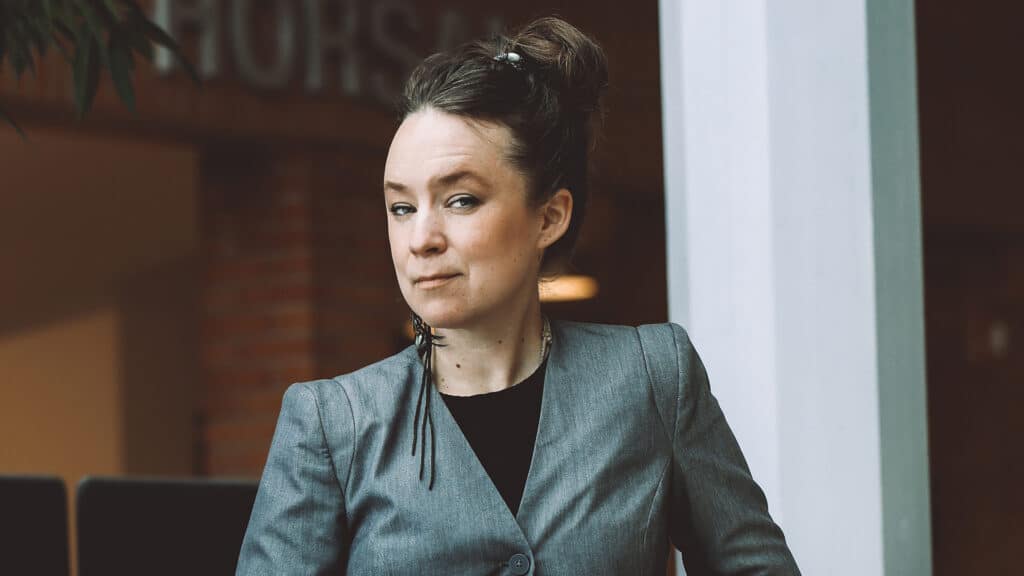
Behind the company is Linda Magdalena Jonsson, an art director and innovator. After many years in the international fashion industry, she realized the industry’s heavy reliance on chemicals and its environmental consequences. This sparked the idea of creating non-toxic textiles. The name Alder Olmai supernaturalcolours reflects this combination of cultural heritage and forward-thinking: supernaturalcolours represents the future, and Alder Olmai draws from the power of the forest.
From hypothesis to validated technology
In the hypothesis testing project "Bio-based dyes from forests and oceans for an environmentally friendly textile industry," funded by BioInnovation, Vinnova, Formas, and the Swedish Energy Agency, Alder Olmai, together with partners such as MOUNID, Yangi, Klippan Yllefabrik, CIT (Chalmers Industrial Technology), and Ludvig Svensson, has demonstrated how nature-based dyes can be developed towards scalability and technical viability for industry.
The project significantly increased the maturity of the technology: both technical and manufacturing readiness reached TRL 5 (Technology Readiness Level, which measures how technically mature a solution is) and MRL 5 (Manufacturing Readiness Level, which measures how mature the manufacturing process is). This means that the solution has now been tested in a relevant environment and is ready for further development towards large-scale production. The team has also developed an industrial requirements specification that forms the basis for continued development and commercialization.
New steps towards a bio-based economy
In the fall of 2025, the company was awarded a new project: Bark2Business, led by RISE Processum. Here, business models are being developed to refine residual flows such as bark and wood chips, an undervalued resource from the forestry industry, into products with higher value, sustainable growth, and export potential.
The vision is color that strengthens both nature and industry
Since 2021, Linda Magdalena has been running Alder Olmai with the vision that color production should be in harmony with nature. The results show that bio-based colors can contribute to a better working environment, preserve biodiversity, and enable more circular material management.
The goal is clear: to offer transparent, non-toxic bio-based inks that protect the ecosystem and strengthen competitiveness.