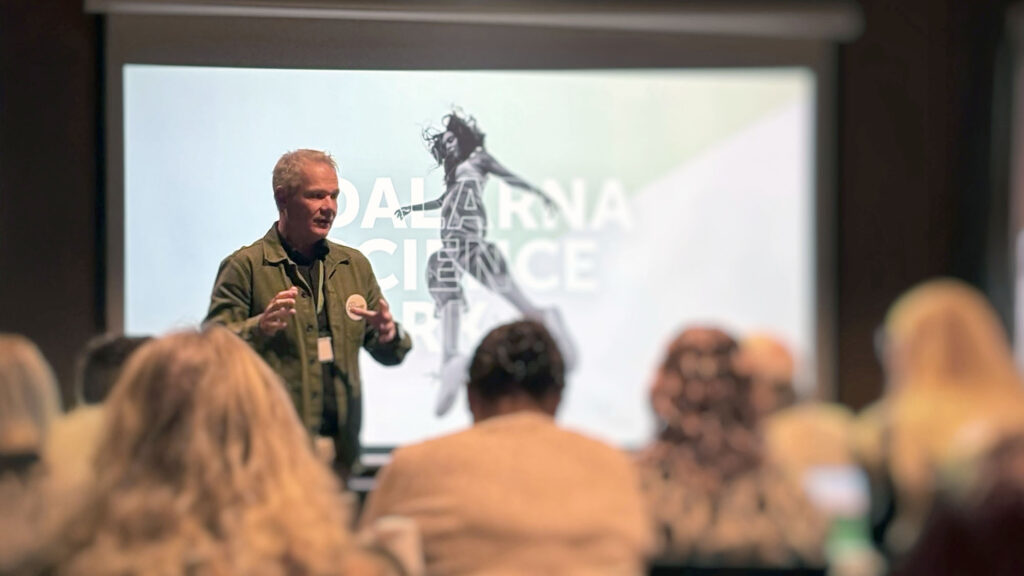
"We are in the midst of a deep climate crisis that is setting the framework and creating opportunities for new business and industrial ventures. We have this decade to make significant differences." These were the opening words of Staffan Laestadius, Professor Emeritus of Industrial Development at the Royal Institute of Technology, during his presentation at a seminar on Tools for Sustainability in Reality organized by Swedish Incubators and Science Parks, Dalarna Science Park and Social Venture Network at the end of March.
In addition to research on the subject, the work on developing a new tool to measure where in the sustainability work a company is, Sustainable Readiness Level and how to avoid green-wash was highlighted. We also got to listen to Mattias Bergqvist, Head of Sustainability at Coop and Linnéa Falkinger, founder of Cashewmeetly about how they worked with sustainability as part of the business model.
Sustainable Readiness Level
The fact that there is a great consensus among climate scientists that fundamental emission reductions must take place during this decade is something we are fed daily. New companies need to start working with sustainability as part of the business model from the start. There are many initiatives today that can help companies work sustainably - one of these is the Sustainable Readiness Level, a scale initiated by Vinnova and SISP based on KTH's Innovation Readiness Level. Frida Vikström, sustainability strategist at Dalarna Science Park, is one of those who worked to develop the scale, which aims to help categorize a company's sustainability work and help see what is the next step in development. The scale is used by many incubators and as support for business developers.
From thought to action - avoid green-wash
Today, there is a great need for more knowledge in being able to measure your company's sustainability development, not least to be able to more easily communicate the journey you are making in the sustainability issue. Defining where you are in the process can actually reduce the risk of green-wash. In other words, it's not enough to boast logos about adhering to some of the goals of the 2030 Agenda. The winner is the one that is genuine, authentic and sticks to its principles, without making a fuss.
Two inspiring companies that have made the sustainability journey part of their business strategy
Coop is a brand that has existed for over 120 years and in 2021 the association was named Sweden's most sustainable brand. Coop has taken a big step in working sustainably with the vision of being Sweden's most important consumer power. Mattias Bergqvist told the seminar how they have used innovation to work more sustainably. To meet the consumer where they are, Coop has developed an app where you can easily scan goods and see how sustainable they are. In this way, they involve their customers and get them to think about sustainability issues.
Another company that has taken the issue of sustainability as a starting point in its business concept is the company Casamansea with the product Cashewmeetly and founder Linnéa Falkinger. Linnéa lives half the year in Senegal and half the year in Sweden. It was in Senegal that she first discovered the cashew apple, which can be cooked and eaten as a vegetarian alternative. A fruit that is otherwise left to rot after harvesting the cashew. Linnéa discovered that it was incredibly tasty, with the fruit also having the consistency of regular meat. Linnéa saw a chance to reduce food waste by preserving the meat from the cashew fruit, as well as the opportunity to create a product to complement regular meat, which we actually eat too much of. In 2021, she launched Cashewmeetly and has had a sustainable, circular and social business model since the start. Something that was a given for her when she started. Not only does she preserve all production in Africa, but she also makes sure to give back to the country by giving part of the profits to various charity projects.