To secure the competitiveness of North Central Sweden for the future, business promoters in Värmland, Dalarna and Gävleborg have organized training in service-driven business development. In simple terms, this is about increasing the profitability of companies by developing value-creating offers with the customer's needs in focus. "This training opened my mind to how to work with services," says Lina Bylund, who took the course.
Small and medium-sized enterprises are the backbone of the Swedish economy. They make up 99.9% of all companies in Sweden and account for almost half of business employment and turnover. But they also face major challenges in an increasingly globalized and digitalized world, where the demands and expectations of customers, investors and the workforce are growing and sustainability is becoming an increasingly important competitive factor.

To meet these challenges, business development through service logic is a powerful tool. It was against this background that a business education in service development was launched in the winter of 2023. Behind the initiative are Paper Province, Dalarna Science Park, Sustainable Steel Region, RISE (Propell) and Sandbacka Science Park.
- "We provide manufacturing companies with knowledge about how they can add services to their existing production. For example, it can be to offer service, maintenance, advice, training, financing or other forms of customized solutions that create added value, says Thomas Sundberg, one of the leaders of the training initiative.
Concrete workshops opened the mind
Six companies from Dalarna, Gävleborg and Värmland have participated in the training. The companies have different starting points and are active in different areas, but they all work with manufacturing. One of the companies is ExTe in Hälsingland, which manufactures and supplies products to timber sellers.
- This training opened my mind to how to work with services. Most services don't need raw materials and require a completely different way of thinking," says Lina Bylund, site manager at ExTe.
For ExTe, the constant challenge is the search for profitability for end customers. The hauliers who transport timber want to optimize how much timber they get on each trip. It's important that the vehicles don't break down, and spare parts service must be fast.
- We want to offer our customers so much more than just a product. We want to provide a total solution to contribute to the customers' profitability and the fact is that we have a lot of services for customers that we have not charged for before, without thinking about it. Through this training, we have realized that we can actually be clearer to customers about what services we offer. Several of them are included when you buy our products, but we will probably be able to start charging for some services as well," says Lina Bylund.
Sustainability mindset
During the training, participants have also considered what sustainable offers they can offer their customers that reduce resource consumption.
- One concrete thing for us is to further extend the lifespan of our products, by offering refurbishment for example. Otherwise, it's about the development of new products and ensuring that it is easy to recycle or reuse materials. We currently see that there are very few end customers who talk about sustainability or who ask how we work with sustainability, and in our case I think that the requirements need to come from the forest industry for there to be more drive in this, says Lina.
Meeting other companies as part of the training was a big plus in her opinion.
- "It's exciting to get tips and ideas from each other and it's very rewarding to meet in person, even though we work in different industries," she says.
Exchange of experiences
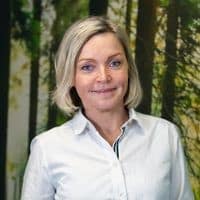
Pia Hellgren was another participant in the training. She is the sales manager at OptiPack in Sunne, which develops packaging and packaging printing.
- We are so product-focused in my industry that it's easy to forget that you can charge for your knowledge and this training has reminded us of that. Specifically, we have started to charge for proofs after this training, something we did for free before. Customers don't find it at all strange that we charge for this service," she says.
Pia thinks that another rewarding part of the training was to learn how large companies have worked with servitization.
- The bigger companies often show the way for smaller companies and it is very inspiring. After going through the cases, we were tasked with discussing in small groups and we were able to break down the case to our reality. For example, we talked about how to make an electric toothbrush better from a sustainability perspective and got lots of ideas! Our customers are asking for recyclable packaging, so we need to be ahead of the game here," she says.
Direction for prioritization
Also participating in the training was Mora Mekanik AB, a company in Dalarna that offers customers technical solutions and mechanical processing.
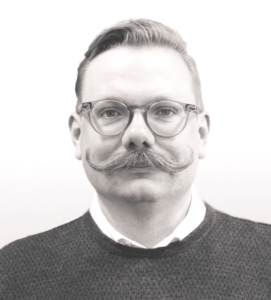
- I'm really happy with the training, it gave me a direction on how to prioritize our efforts for the business in the future. We looked at the customer's path through the business and how we work with the customer experience at every stage. In concrete terms, it can be about everything from how we trim our business value to how we work to become part of the customer's construction process, says owner Tomas Nordby.
- We were given the tools to broaden our business and look at what customer needs there are that we can fill through our services," he continues.
The benefits of servitization
Servitization can mean more loyal and satisfied customers, more stable and long-term revenues, hard-to-copy offers, stronger branding, as well as more sustainable offers that reduce resource consumption, extend product life and increase reuse or recycling.
Shifting your business from being product-driven to being service-driven requires a lot of effort from the company. For example, understanding the real needs of customers and an ability to create solutions that match them. The company may also need to develop its skills, business model, marketing and culture to deliver high-quality services effectively.
- The training guides companies through all this and by mixing theory, practical exercises and individual coaching, you not only increase your skills, but after the training you are practically equipped to invest in servitization, says Thomas Sundberg.
Increasing innovation capacity
The training has been carried out within the framework of the Focus Industry spets project and is linked to the industrial transformation strategy developed by Region Dalarna, Region Gävleborg and Region Värmland. It states that small and medium-sized enterprises play an important role in the region's ecosystem. These companies constitute an important supply system for larger companies, while having a relatively low innovation capacity.
To drive the innovation capacity of small and medium-sized enterprises in the right direction, the regions have agreed, among other things, to
- use industry's own needs for transformation as a driver for innovation.
- support the emergence of new business models and technologies for the circular economy
- encourage more SMEs to take advantage of the opportunities offered by digitalization
- support businesses' capacity for change with resources for strategic development.